

the postcard project: the beginning of a series
from an idea to the first chapter of a postcard series

the beginning of a postcard universe
From a Small Idea to a Real Series
A while ago, I wrote a post about a postcard project I had been thinking about for some time. At that time, it was still very loose—more like a sketch of an idea than something concrete. I didn’t really know what it would become, or even whether it would become anything at all.
But something interesting happened after I shared it.
some of my girlies left comments telling me that they found the idea beautiful. Some said they related to the emotional side of sending postcards. Some simply said they would love to see where this goes.
Those small responses stayed with me more than I expected.
Because they made me realize this wasn’t just something I was thinking about alone.
It was something that could actually exist outside of me.
And over the past weeks, instead of continuing to only think about it, I started building it.
Slowly, quietly, piece by piece.
And today, it finally has a form.
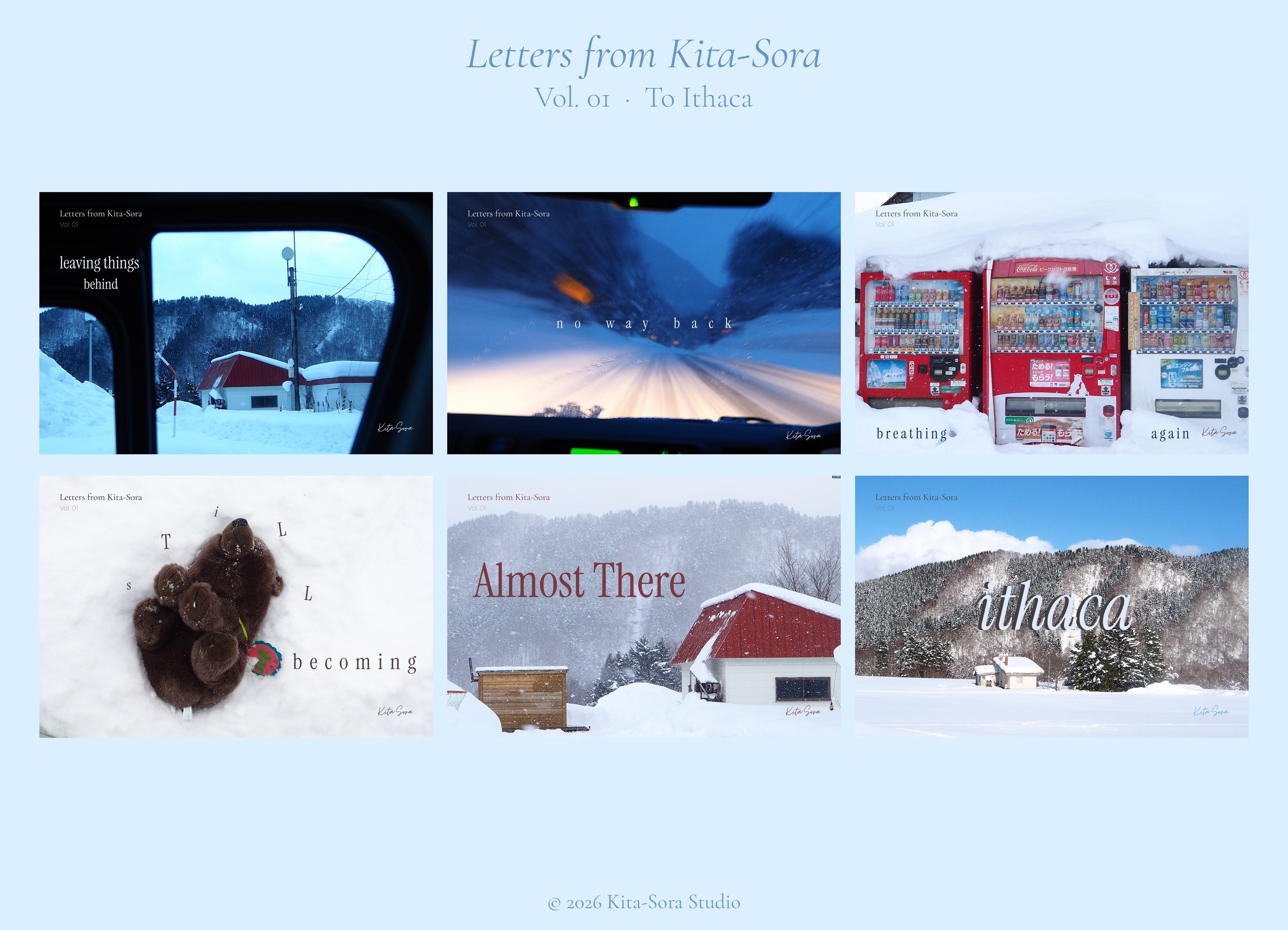
Vol. I — To Ithaca is the first completed version of that idea.
But to understand why this project matters to me, I need to go back to something much more personal…again (if you’ve read my previous post a postcard is my way of saying "I see u", you’ll understand what i’m talking about here ;))
why postcards?
Why does this postcard series exist in the first place?
The truth is, it comes from something very simple in my life that has existed for a very long time. Since I was young, I have always been deeply drawn to stationery, small paper goods, and anything that can hold traces of a moment.
Even now, whenever I travel, I still find myself spending a long time in stationery stores, looking at small objects that most people might consider unnecessary, but which always make me feel strangely calm and happy.
I have always collected small things. Wrapping papers, stickers, packaging from snacks, little fragments of daily life that most people would throw away. I often cut them out and paste them into my notebooks, turning them into small journals of my life.
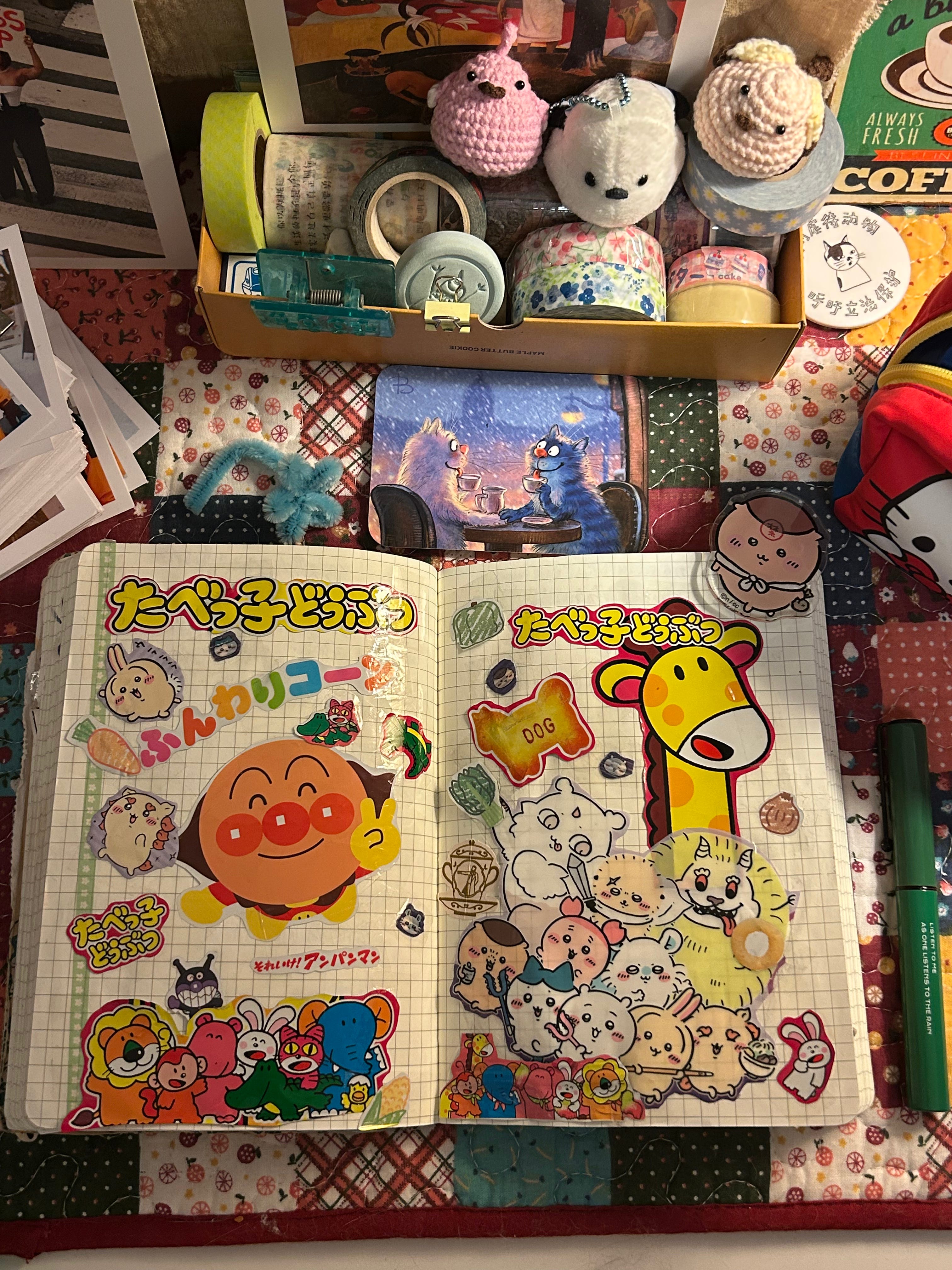
Because to me, these things are never just “objects”. They are ways of preserving a moment. A feeling. A version of myself that existed only briefly.
When I look back, I realize this is also where Kita-Sora actually begins.
I have always wanted to design the things I loved most when I was a child. But for a long time, these preferences were seen as impractical, unnecessary, or not meaningful enough. Now, having built my own brand, I finally have the space to take those instincts seriously.
And among all these things, postcards have always held a very special place.
Whenever I travel, I naturally fall into the habit of sending postcards to friends. Not because I want to show them where I am, but because I want to send them a moment. A feeling. The emotional state of being somewhere far away, at a very specific time, that can never be repeated again.
To me, a postcard has always felt more meaningful than a souvenir.
A souvenir can be bought anywhere. But a handwritten postcard carries something unrepeatable: the time, the weather, the emotional state, and the version of yourself that existed in that exact place.
That is why, over time, I started to feel that I didn’t just want to send postcards.
I wanted to create them.
And what started as a personal habit slowly made me realize something: I didn’t just want this to exist as a one-time act.
why this became a series?
The reason I decided to turn this into a long-term series is because I already know one thing about myself very clearly: I will continue traveling for the rest of my life. I will keep encountering new places, new people, new cultures, and new moments of inspiration.
And if my life is going to continue being shaped by these experiences, then it feels almost natural to ask—why shouldn’t these experiences become something that can reach others as well?
Creating has always been my way of processing the world. So this postcard series feels less like a “project” and more like an extension of how I already live.
At the same time, I have also been deeply inspired by the idea of snail mail culture. I love the idea that people across different countries, living completely different lives, can still exchange something physical, something slow, something intentional. I have seen creators build their own small snail mail clubs online, and I found that idea incredibly beautiful.
Because in a world that moves so fast, physical objects can become anchors.⚓️
They can hold relationships in place.
They can quietly say: I was here. I thought of you. I still do.
And more than anything, I hope my future community can eventually feel like that too.
Not just through digital interaction, but through something that can be held, kept, and returned to over time.
But the deeper I thought about this idea, the more I realized it wasn’t just about postcards at all—it was about the way I understand journeys themselves.
why ithaca?
If you have read some of my earlier writing about Kita-Sora—especially The Map of This World—you might already know that Ithaca is one of the core metaphors of this world.
Ithaca comes from Homer’s Odyssey, but the interpretation that stayed with me most deeply is Cavafy’s poem. In that poem, Ithaca is not a destination we are meant to reach. It is the reason we begin the journey in the first place.
It is the distant horizon that gives shape to movement itself.
For me, Ithaca represents something even more personal.
It is both outward and inward at the same time.
On one hand, it is the endless desire to explore the world, to travel, to meet new people, and to keep moving toward something that may always remain slightly out of reach.
On the other hand, it is the inward journey of trying to understand yourself, building a life that feels honest, and slowly learning how to live within your own inner world.
These two directions may seem opposite, but in my experience, they are deeply connected. The more I move outward, the more I am forced to return inward. And the more I understand myself, the more I am able to move outward again.
That is why Ithaca felt like the only possible name for the first volume of this series.
Because Ithaca is not a place.
It is the tension between leaving and returning.
And in many ways, Hokkaido became one of my own Ithacas. It started as a place I escaped to, and over time became something I kept returning to again and again. A place that slowly shaped my sense of direction without ever fully defining it.
And once I understood the direction of this journey, the next question naturally became its structure.
the six chapters
I also knew from the beginning that I wanted this series to consist of six postcards.
Part of it is simply personal preference—I have always loved the number six. In Chinese culture, it often carries a sense of smoothness, flow, and good fortune. There is something balanced about it. Not too many, not too few.
But more than that, six feels like a complete rhythm.
One is a moment.
Three is a fragment.
But six feels like a journey.
It is enough space for departure, uncertainty, transformation, clarity, arrival, and return. It is enough to hold a full emotional arc without becoming overwhelming or losing its intimacy.
That is why I have decided that all future postcard series will also follow this structure: six chapters at a time, each one capturing a different emotional movement within a larger journey.
That structure eventually took shape as the following six chapters.
These six postcards are not meant to be read as a strict sequence, but rather as different emotional states that we all move through at different points in our lives.
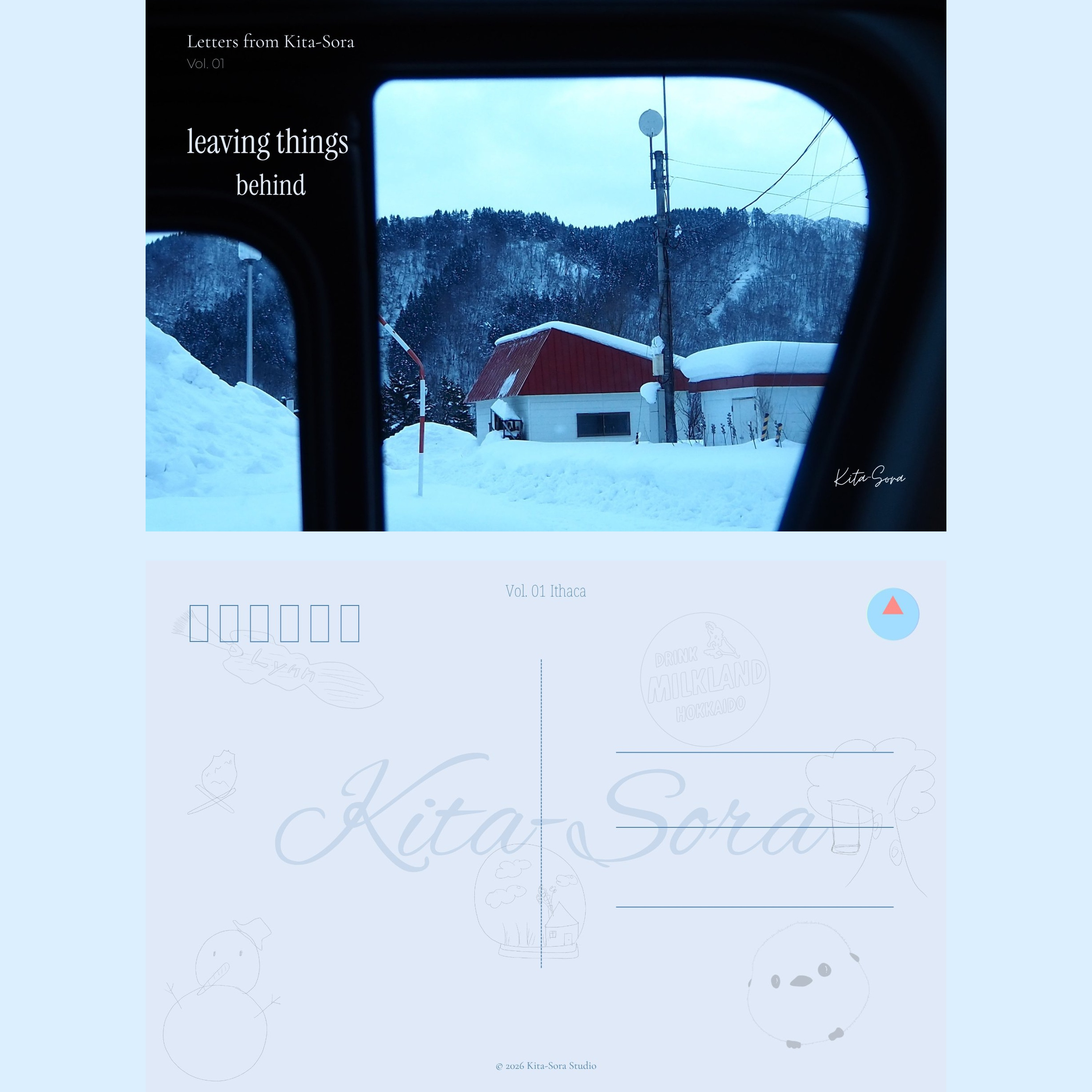
✦ Leaving Things Behind
This is the moment of departure. Not because we no longer care, but because we do. Life moves forward whether we are ready or not, and at some point we consciously choose to step into that movement, even while still holding onto what we leave behind.
✦ No Way Back
The point where leaving becomes irreversible. Not because the past disappears, but because we have already changed. There is a quiet realization that returning is no longer possible, even if we wanted to.
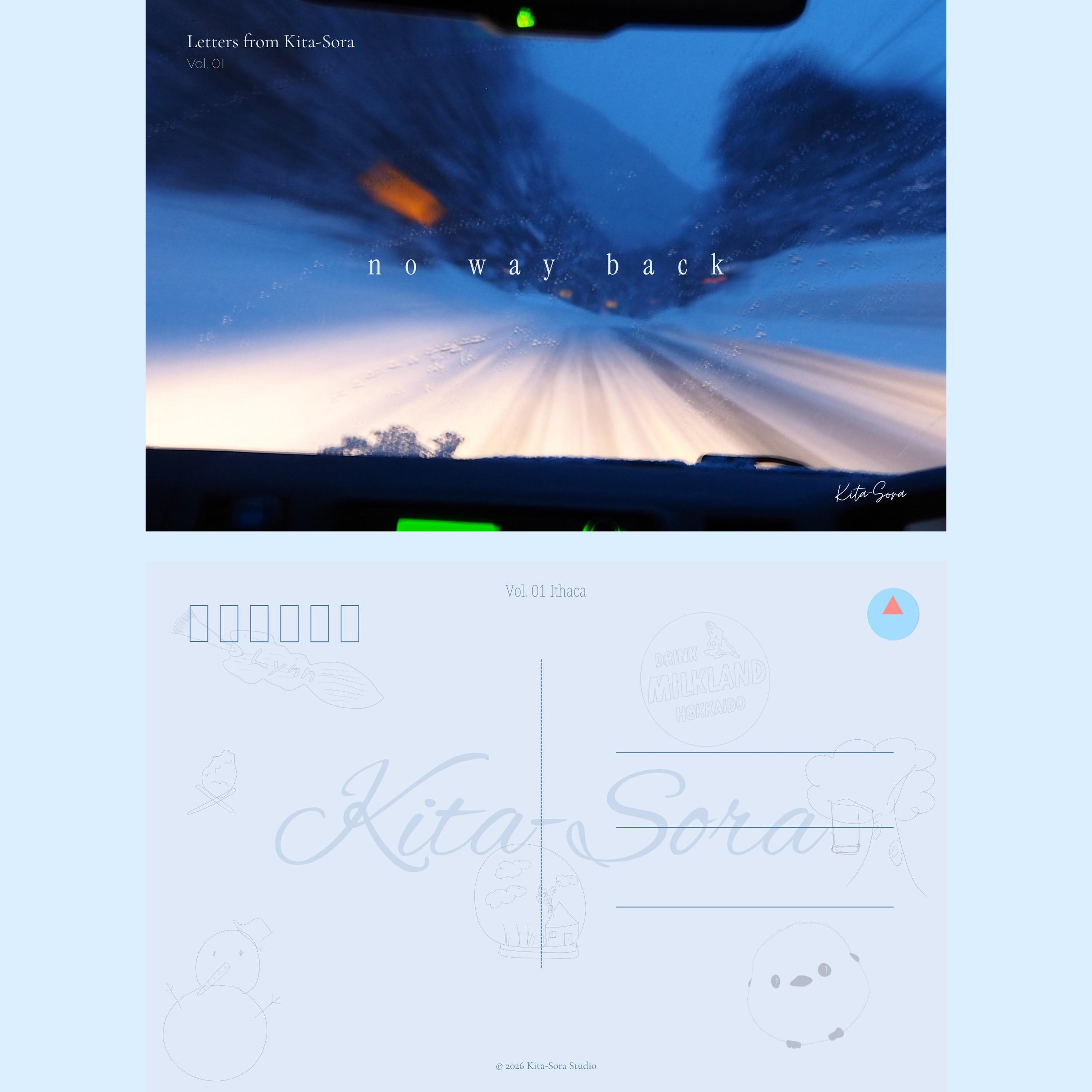
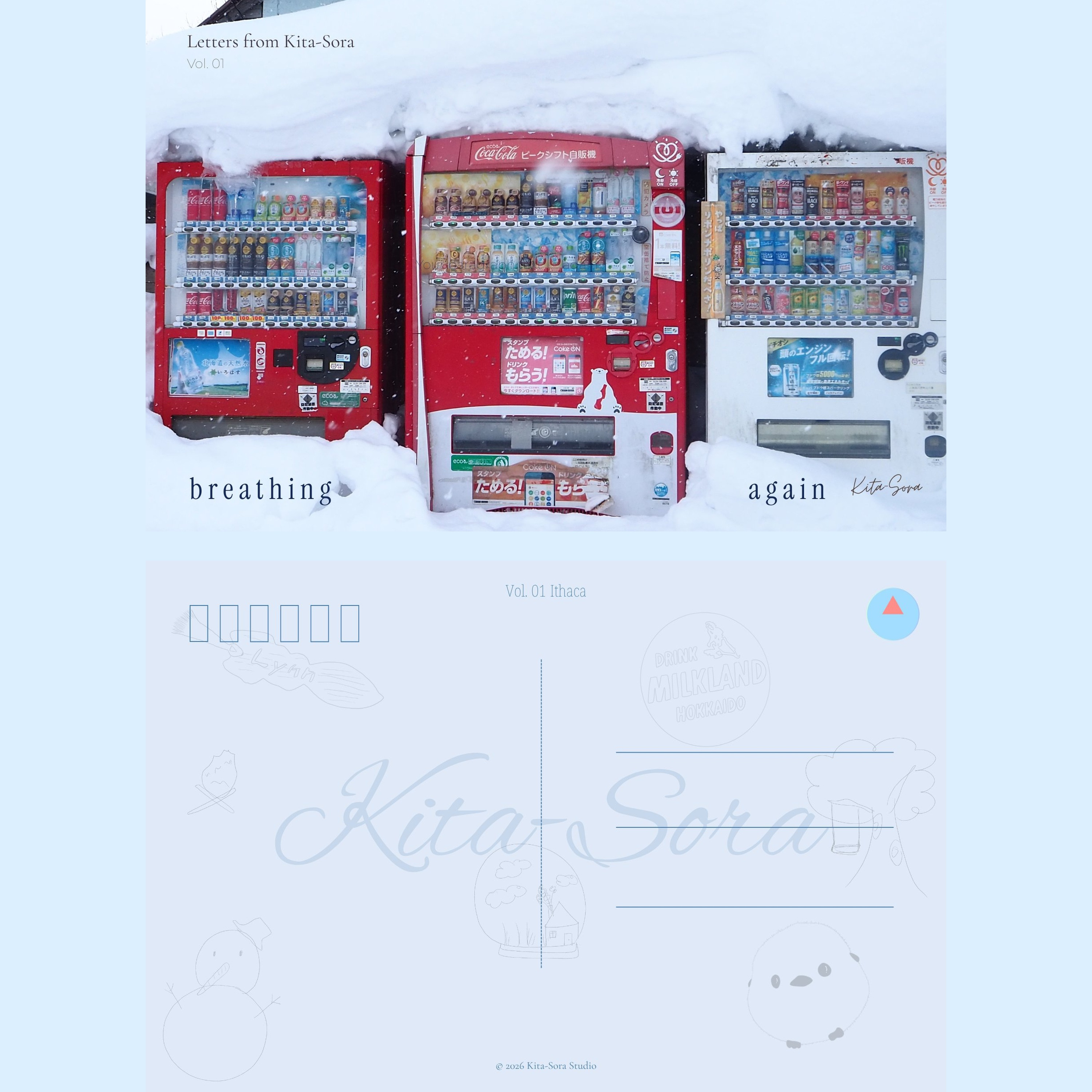
✦ Breathing Again
The stage where uncertainty slowly begins to loosen its grip. After stepping into the unknown, there is often a period of pressure and disorientation. But eventually, the breath returns. The path begins to feel less suffocating, more open.
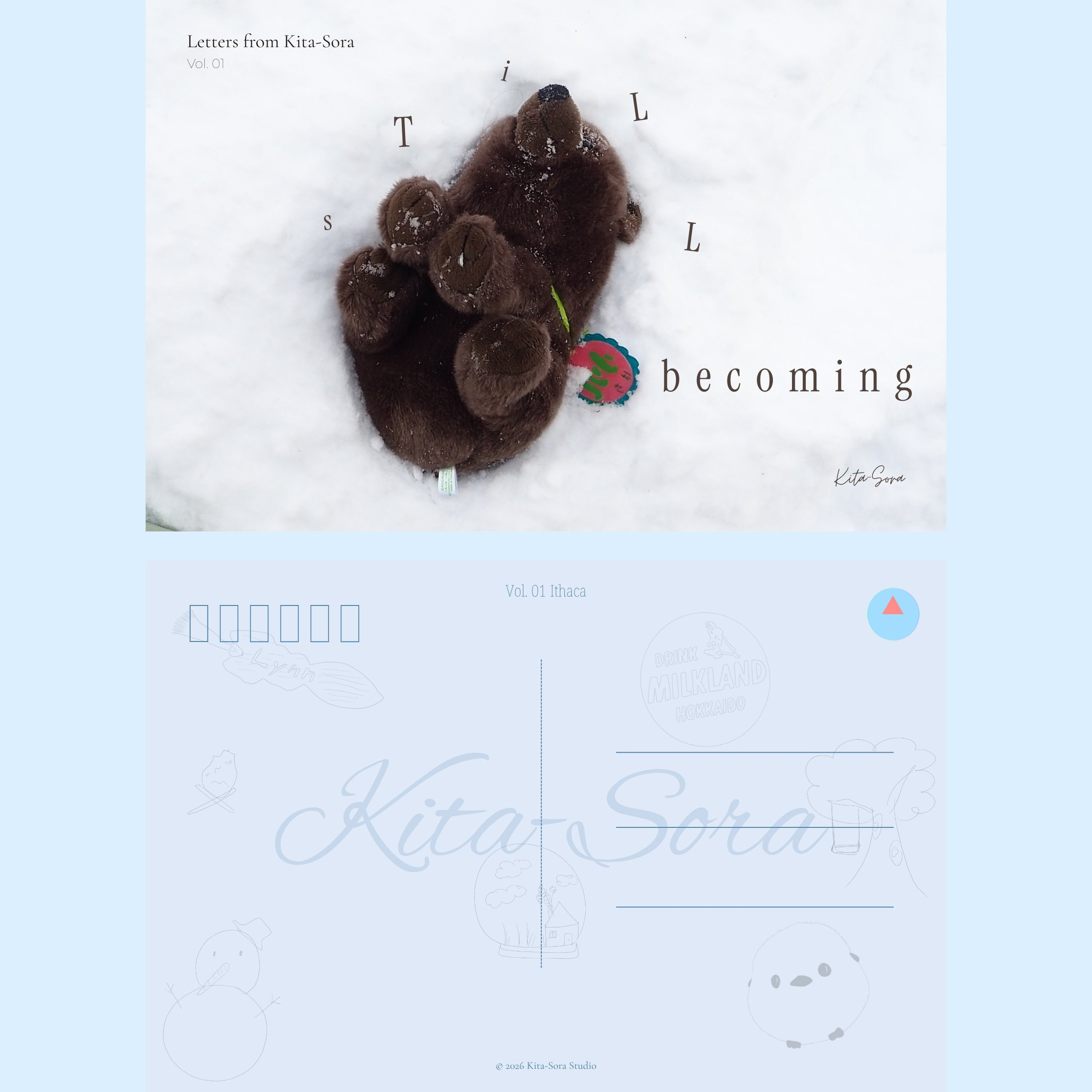
✦ Still Becoming
A reminder that growth is never complete. We are always in a state of becoming, always shifting toward something we have not yet fully reached. This stage is about accepting that there is no final version of ourselves.
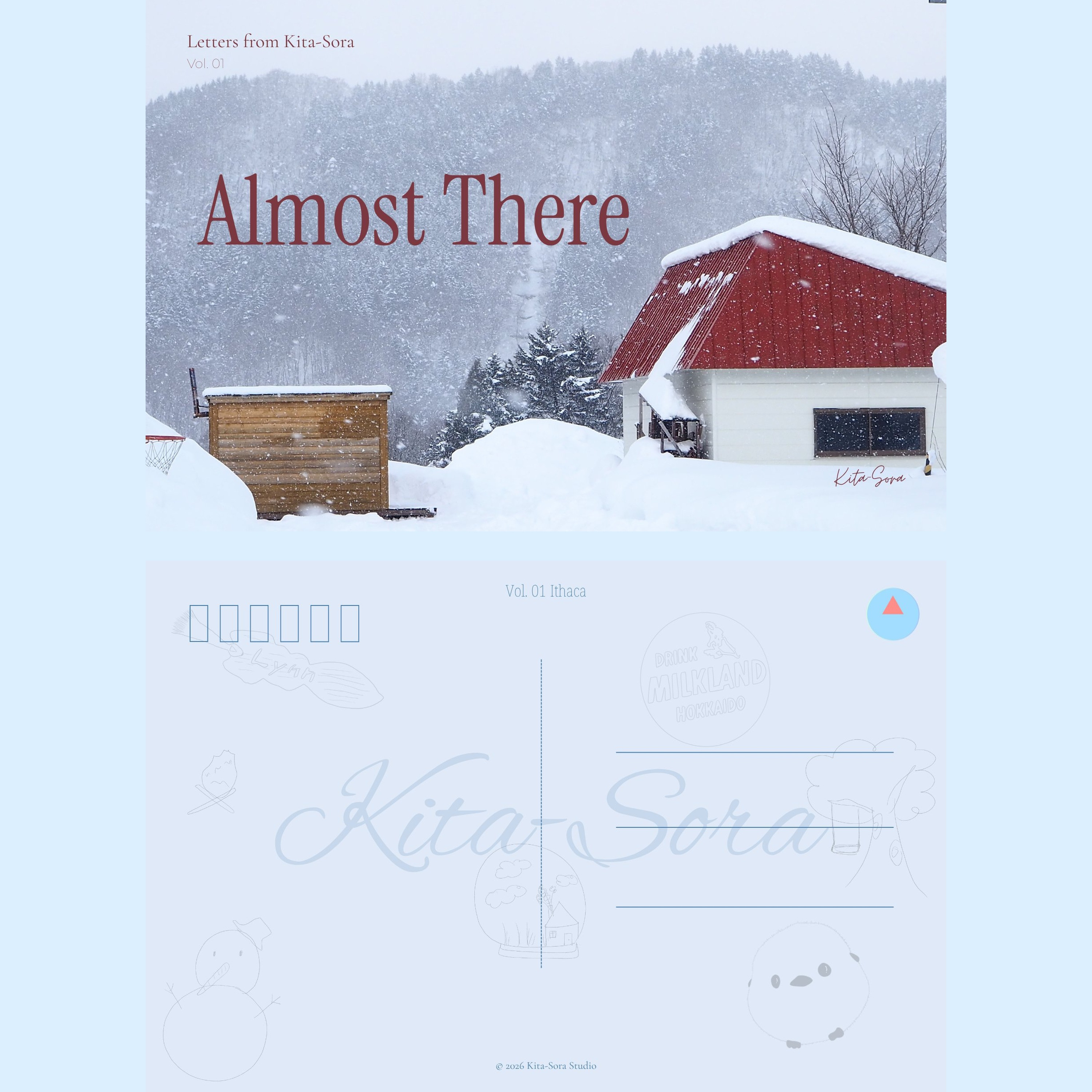
✦ Almost There
The moment where something begins to feel close. Not fully arrived, but no longer distant. It is a fragile space between hope and hesitation, where everything feels more real and more uncertain at the same time.
✦ Ithaca
Not an ending, but a reflection. Ithaca is the destination that is not really a destination. It is both the place we move toward and the place we realize we have been carrying within us all along.
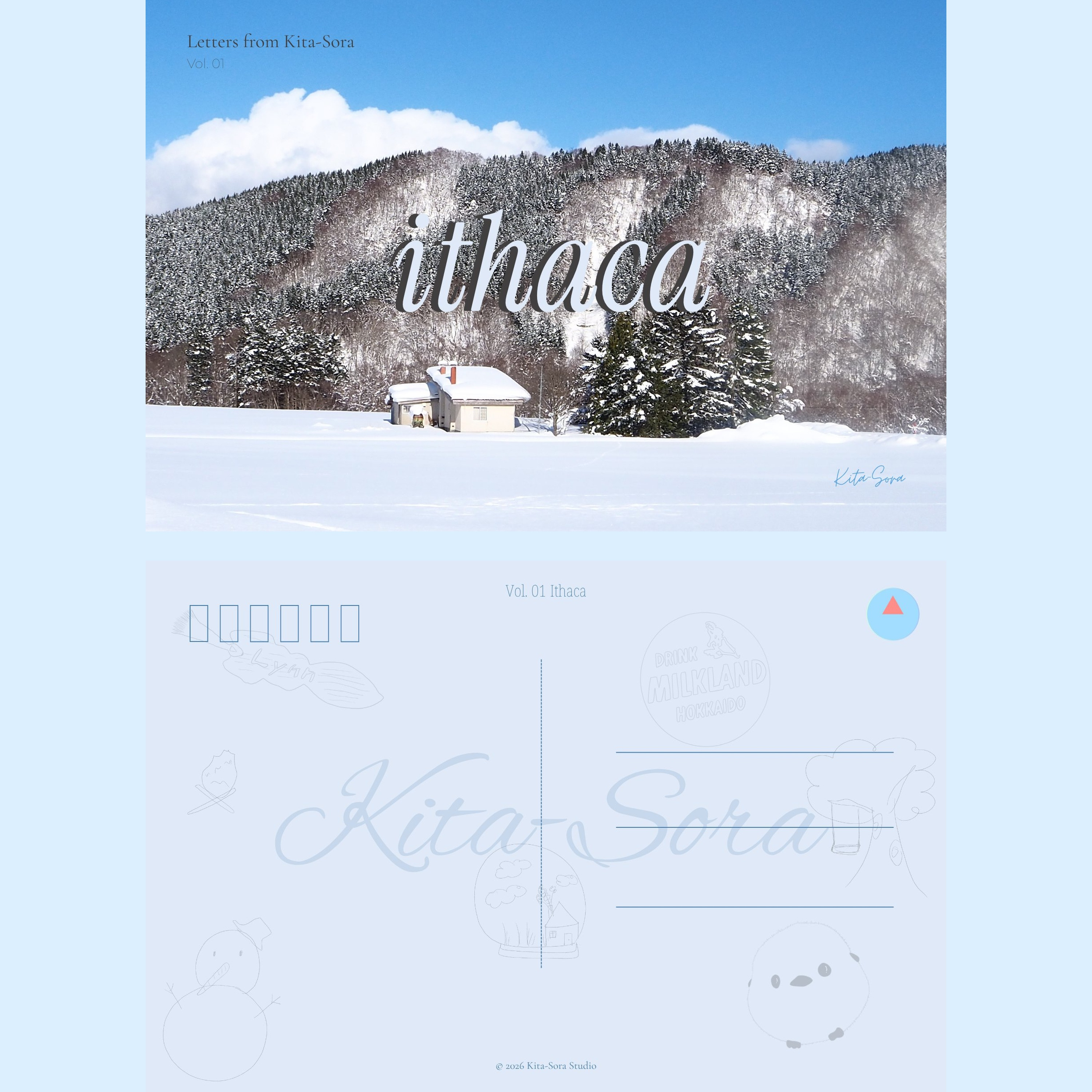
And perhaps after Ithaca, there is only another departure.
a journey that loops
At first glance, these six chapters may seem like a linear progression. But the more I think about life, the more I realize it rarely moves in straight lines.
After Ithaca comes another departure.
After arrival comes another question.
After becoming comes another version of yourself waiting to be discovered.
That is why I see this series not as a line, but as a circle.
A loop that continues unfolding as long as we are willing to keep moving.
what i hope this becomes
More than creating postcards, I think what I have always wanted to create is a way for people to stay connected—to moments, to places, and to each other.
Maybe what I have been collecting all these years was never just stationery, but fragments of time worth remembering.
And maybe these postcards are simply a way of saying:
You are still on the way.
✦ first postcard drop
If this chapter resonates with you, I would love to send a small piece of it your way.
This is the first physical expression of Kita-Sora—one handwritten postcard sent directly from Hokkaido.
Each postcard will be personally written by me and mailed internationally as part of a small experimental release.
This is not a product in the traditional sense, but a way to share a small piece of this world with the earliest supporters of this journey.
If you would like to receive one, you can find the details in the link below.
This is Vol. I — To Ithaca. A series of six postcards, each capturing a different stage of a shared human journey.
This is only the beginning of what will become a long-term series—one that will continue to evolve as I travel, create, and build Kita-Sora.
With sincerity,
Lynn🧸✨
—
✨ Explore Kita-Sora — Your Gateway to the North Sky
Welcome to the North Sky. If you’re new here, start with The Map of This World, your guide to the key reflections, stories, and creations in this space. It’s a living map of the journey, where you can explore fragments of life, creativity, and intentional living, and see how they connect.
If this world resonates with you, you can buy me a matcha — every sip fuels new creations, reflections, and stories, and helps me continue building this space with care and intention.
I’m Lynn, the creator behind Kita-Sora — a visual world built around slow living, emotional clarity, and the quiet process of becoming. I share fragments of this journey through creative work, everyday reflections, and the ongoing process of shaping both a brand and a life with more intention.
You can also follow along and connect with me here:
Pinterest: @Kita-Sora Studio → where I build the visual language of Kita-Sora
Instagram: @lynnurfavgurl → where I share real-time moments of my creative and personal journey
so exciting!
the postcards are so cute lynn!!! love this project you are doing 💕🫶